Your health.
For Parents
THYROID DISEASE AND CHILDREN
Thyroid hormones play a very important role in healthy growth and development during childhood, impacting metabolism, the nervous system and organ functions.¹ Therefore, it is vital that parents understand the signs and symptoms of thyroid disorders. It is also important to remember that treatments are available and that early intervention will help to avoid any long-term issues or complications.¹
Children diagnosed with thyroid problems need the support of their families to ensure they take their medication regularly and understand their condition. It is also recommended that schools/nurseries are informed so that they are aware of the child’s diagnosis and medication requirements.




Meet Hypo and Hyper, the Thyroid Butterflies
In order to spot the symptoms associated with hypothyroidism and hyperthyroidism, think of them as butterflies, each with a different personality: Hypo (short for hypothyroidism) and Hyper (short for hyperthyroidism).
Meet Hypo, the slow and sluggish butterfly
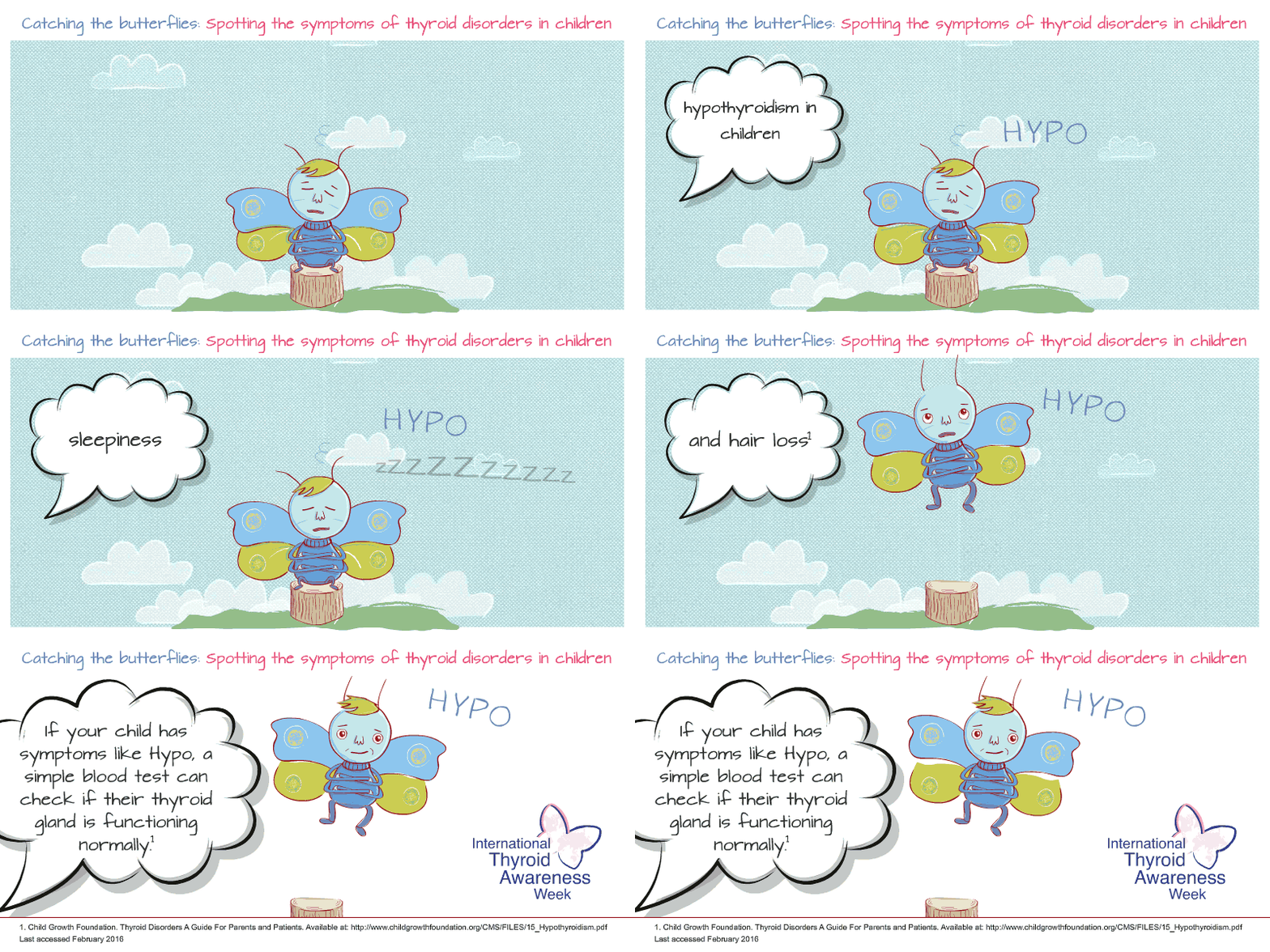
Hypo is a blue butterfly. He is slow moving compared with his friends and not growing as fast. He is often tired and sometimes sluggish. His skin is cold and his heart rate is slower than that of other butterflies.
Meet Hyper, the highly active and restless butterfly
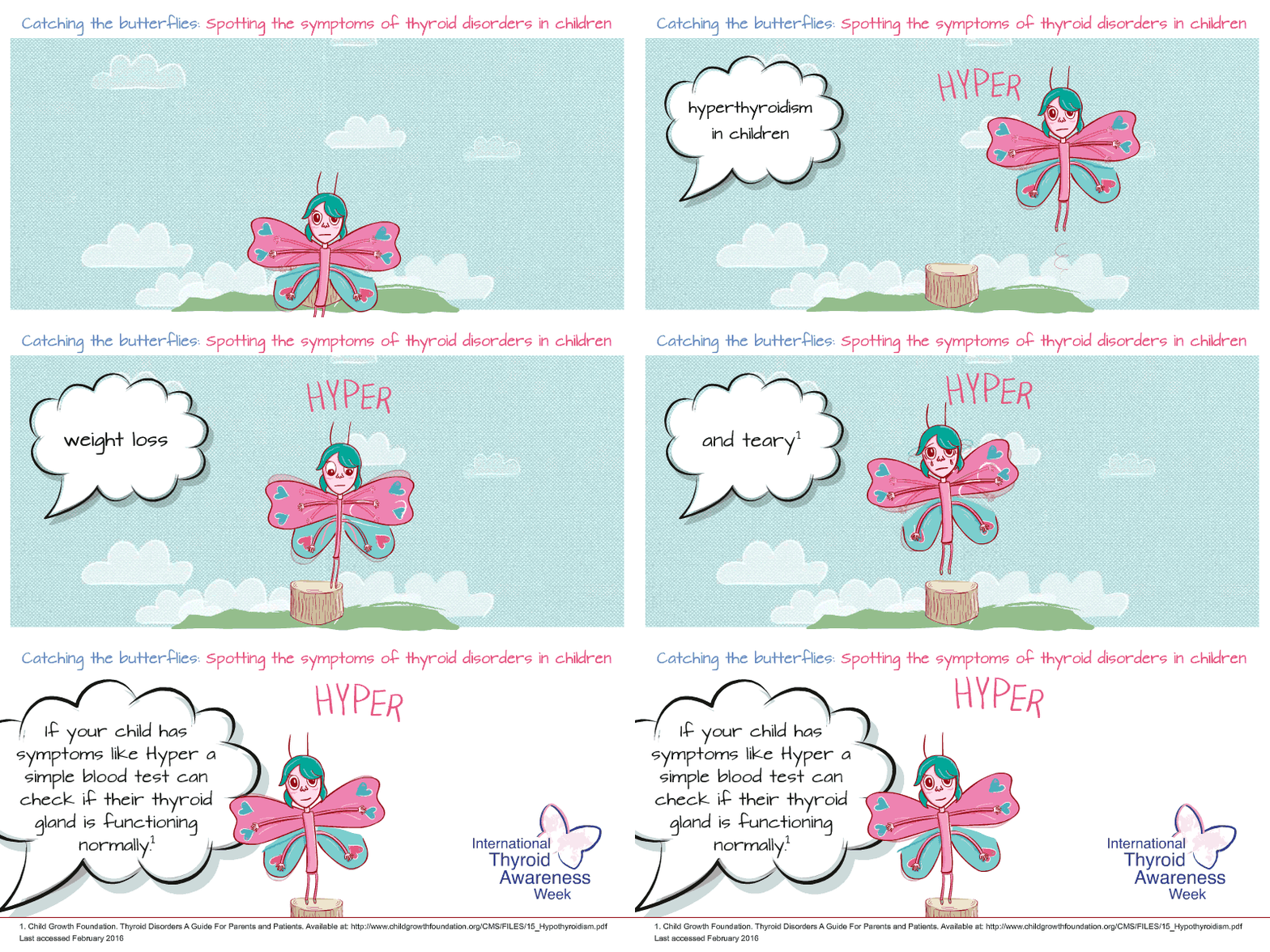
Hyper is a thin, overly active, fidgety pink butterfly. She is irritable and easily upset. She is often hungry and eats a lot, but is still losing weight.
Could my baby experience thyroid problems?
Children can experience thyroid problems from birth as they can be born without a properly working thyroid gland, a condition called congenital hypothyroidism.² This condition can be difficult to spot at birth as babies may not have any symptoms, or may only display mild symptoms that often go unrecognized.²
What should I look for?
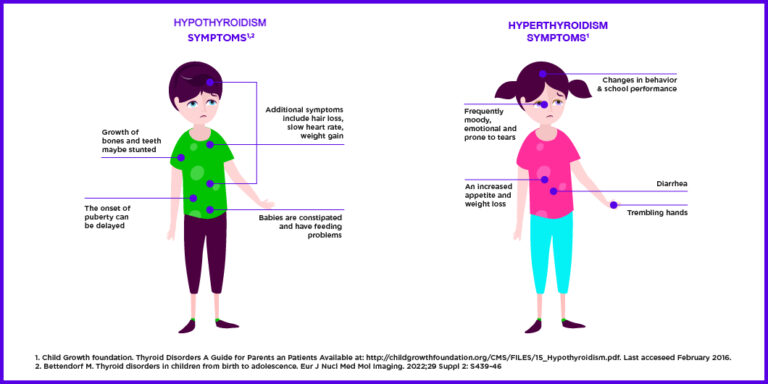
Typical symptoms of congenital hypothyroidism include:²
- Prolonged jaundice
- Poor feeding
- Poor muscle tone
- Constipation
- Cold extremities
- Excessive sleeping
To avoid the more serious effects of untreated congenital hypothyroidism – including impaired brain development – screening for every baby is recommended soon after birth. The preferred time for screening is typically a few days after the child has been born.² Children with congenital hypothyroidism are treated with proper medication in the same way as adults.² This treatment can ensure that the child continues to develop normally.²
If you are at all concerned that you or your child may be at risk for, or suffering from, thyroid problems, please discuss this with your doctor. To aid your consultation, download our Wellbeing Diary to help you keep a check of the symptoms you and/or your child is experiencing.
An underactive thyroid gland in children
The most common cause of acquired hypothyroidism is an autoimmune reaction.³ Hashimoto’s thyroiditis is a cause of acquired hypothyroidism where the body’s immune system attacks the thyroid gland and interferes with the production of thyroid hormones.⁴
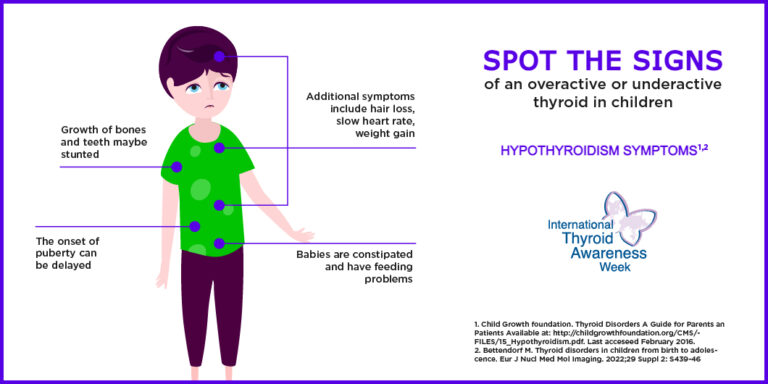
The signs of hypothyroidism in children can vary depending on their age when the problem starts:
- Babies may be jaundiced for longer than usual¹
- Older children may experience stunted growth in terms of their bones or teeth¹
- Children of school age may experience learning difficulties and puberty may be delayed.¹˒³
Treatment
The goal of hypothyroidism treatment in children is to restore hormone levels to normal and stimulate normal growth and development. The appropriate medication for hypothyroidism in adults are also recommended for use in children. However, the dose is tailored to match the specific weight and needs of the child.¹
If you are at all concerned that you or your child may be at risk for, or suffering from, thyroid problems, please discuss this with your doctor. To aid your consultation, download our Wellbeing Diary to help you keep a check of the symptoms you and/or your child is experiencing.
An overactive thyroid gland in children
The autoimmune disorder Graves’ disease is responsible for almost all the cases of hyperthyroidism in children. Graves’ disease tends to be more common in teenagers than toddlers, and generally affects more girls than boys.¹
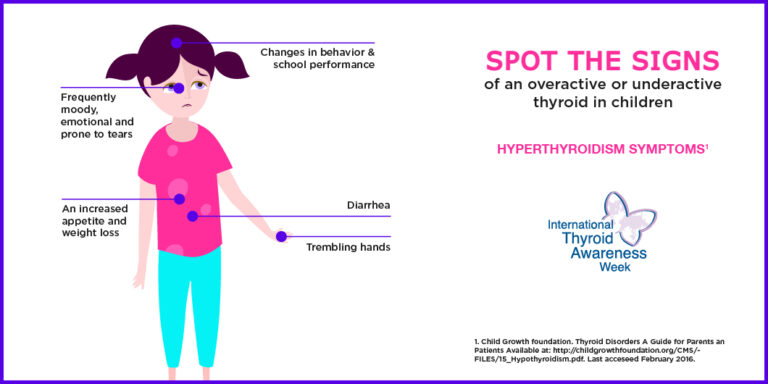
Graves’ disease in children can often be difficult to identify because it develops slowly. However, there are common signs and symptoms to be aware of. These include:¹
- Changes in behavior and school performance
- Sleeplessness or restlessness
- Irritability
- Needing to get up in the night to urinate
- An enlarged thyroid gland
- Trembling hands
- Slight bulging of the eyes
- An increased appetite but combined with weight loss
- Fast heart rate
- Nervousness
- Diarrhea
Treatment
The goal of treatment in children with hyperthyroidism is to reduce the amount of thyroid hormone present in the bloodstream. There are several treatment options available, all of which are involved with possible complications and should be carefully discussed with a doctor.¹ In children who experience side effects from anti-thyroid medications, surgery may be the preferred option.¹ Radioactive iodine therapy is unlikely to be used as the long-term effects in children and teenagers are not known.¹
If you are at all concerned that you or your child may be at risk of, or suffering from, thyroid problems, please discuss this with your doctor. To aid your consultation, download our Wellbeing Diary to help you keep a check of the symptoms you and / or your child are experiencing.

- Bettendorf M. Thyroid disorders in children from birth to adolescence. Eur J Nucl Med Mol Imaging 2002; 29 (Suppl 2): S439–S446
- British Thyroid Foundation. Congenital hypothyroidism. Available at http://www.btf-thyroid.org/information/leaflets/42-congenital-hypothyroidism-guide . Last accessed February 2026.
- University of Rochester Medical Center. Acquired hypothyroidism in children. Available at https://www.urmc.rochester.edu/encyclopedia/content.aspx?contenttypeid=160&contentid=4 . Last accessed February 2026.
- British Thyroid Foundation. Just for Kids. Available at http://www.btf-thyroid.org/information/for-parents-and-children/115-just-for-kids . Last accessed February 2026.